
Journaling as the Gateway to Our True Self
Through journaling, we are getting to Know Ourselves. As we transfer our inner world into writing, we are creating a distance and can see ourselves with new eyes — allowing new perspectives to emerge.
As the communication with ourselves evolves and new questions arise, what was once seen as “my thoughts” is beginning to shift into “just thoughts”.
What Are Thoughts?
We are so accustomed to blindly accepting our inner narrative. But what is it really, and where does the thoughts come from?
There is a constant stream of thoughts, defining our experience of reality, but only to the degree that we allow it to.
The more we pay attention to our inner dialogue and how it affects our emotional state, the more we realise its importance and our potential to change it.
From our innocence, through conditioning, and the need to fit in, we have agreed upon a set of rules that defines our reality. But when we are ready and willing, we can begin to step outside of our limited perceptions and dare to ask challenging questions that put everything in perspective:
Is this really true?
Where do these thoughts and ideas come from?
How do these thoughts affect my state of being and my experience of reality?
These reflections might seem simple, but when we ask them with courage and a willingness to know the truth — they open doors to new ways of relating to life and seeing ourselves. As we unlock hidden beliefs, we expand our way of being.
This can be both exhilarating and terrifying, depending on who we are and where we are in life. And if it is, it is a good indicator that there is something of value to be discovered.
You Are Not Your Thoughts
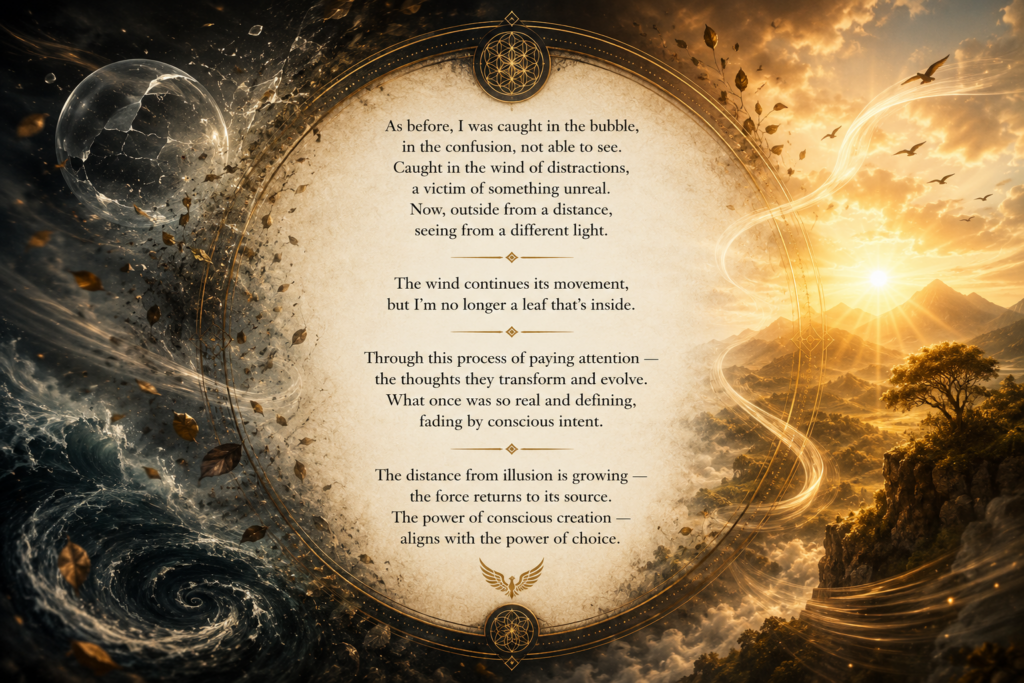
Through writing our thoughts onto paper, we externalise the thinking and separate ourselves from it. As we are stepping out from the bubble of perception and removing ourselves from its influence, we can see with more clarity.
When we no longer confuse ourselves with our thoughts, we are less invested in their outcome — in being right or wrong. Because when we are not our thoughts, they do not define our worth.
As we detach, we loosen the bond that keeps us trapped in rigid thinking. What once held emotional weight begins to soften, and the narratives of limited potential and self-worth lose their grip.
It becomes a process of disidentification — no longer unconsciously believing every story and assumption that presents itself.
As we are no longer automatically dominated and defined by the inner critic, we are able to observe, to question, and to think for ourselves: moving closer to our true nature and personal fulfilment.
From Hidden to Seen
By the power of the written and spoken word, thoughts gain form and come alive.
In this process of materialisation, thoughts evolve from hidden to seen, from air into earth, from mind into matter.
When thoughts are floating around in the elusive field of mind, they are working in the back– and–underground. As they are more difficult to see, they are making their case silently in the periphery.
But now, on record and placed into conscious light, there they are. The stories, ideas, assumptions, and beliefs can’t be denied. Served on the plate, there is simply no place to hide.
We are enabling ourselves to see…
And what we see, what we know — we have the power to affect…
With our inner world reflected in front of us, we are becoming aware of how the repetitive narrative in our minds creates our experience of life and — how we are co-creating our reality based on what thoughts we entertain, believe, and repeat.
Thus, the narratives we permit to play throughout our days define our lives — what we continuously repeat affects our state of being and co-creates our reality.
Just as it is easier to see our own “unflattering faults” in others, externalising our inner dialogue allows us to see ourselves in a different light and the narrative that was consuming us begins to lose its influence.
Take a Seat – Let’s Be Real
By the power of journaling, our unconscious beliefs are becoming conscious, and essential truths have the potential to emerge.
“Words cast spells. That is why it is called spelling”.
Entering the space of self-reflection, away from the motion and commotion of life — we create a moment of silence and peace, enabling ourselves to see.
There they are, raw and real. The stories might not be true; oftentimes, they are not kind, but at least in this moment, this is what is going on.
“We can deny reality but we cannot deny the consequences of reality.”
There is no use denying. Denying doesn’t benefit us in any way; it only serves to postpone a problem that is already there, regardless of whether we like it or not.
And the best we can do is to address it before it grows to the point where it overwhelms us.
Just like the dirt on the floor doesn’t go away merely by us ignoring it, so do our unconscious beliefs and limiting stories remain until we address them.
When we dare to look and face what is there, we can clean the stench and live with more ease.
This is one of the grand benefits of journaling: taking it all out in plain sight, unfiltered and without makeup.
With honesty and transparency, we are creating clarity and liberating ourselves from what no longer serves.
When the emotional bond lessens, we can see the thoughts for what they are and realise their actual effect on our lives.
Released from the charge, our system calms. Unattached and uninvolved — we may calmly observe.
By cleaning out our closet, we can question the assumptions we have blindly agreed to without a second thought.
IS THIS REALLY TRUE…?
Is this my belief, or someone else’s?
And more importantly…
Do these beliefs and assumptions serve me — my desired state and wellbeing?
Are they helping me to create the life that I want to live?
Or are they working against me?
This is a continuation of Know Thyself — The Transformative Power of Journaling (You Are Not Your Thoughts!), which is a series where we explore the power of our language and how we are constantly co-creating our reality — with or without our conscious participation.